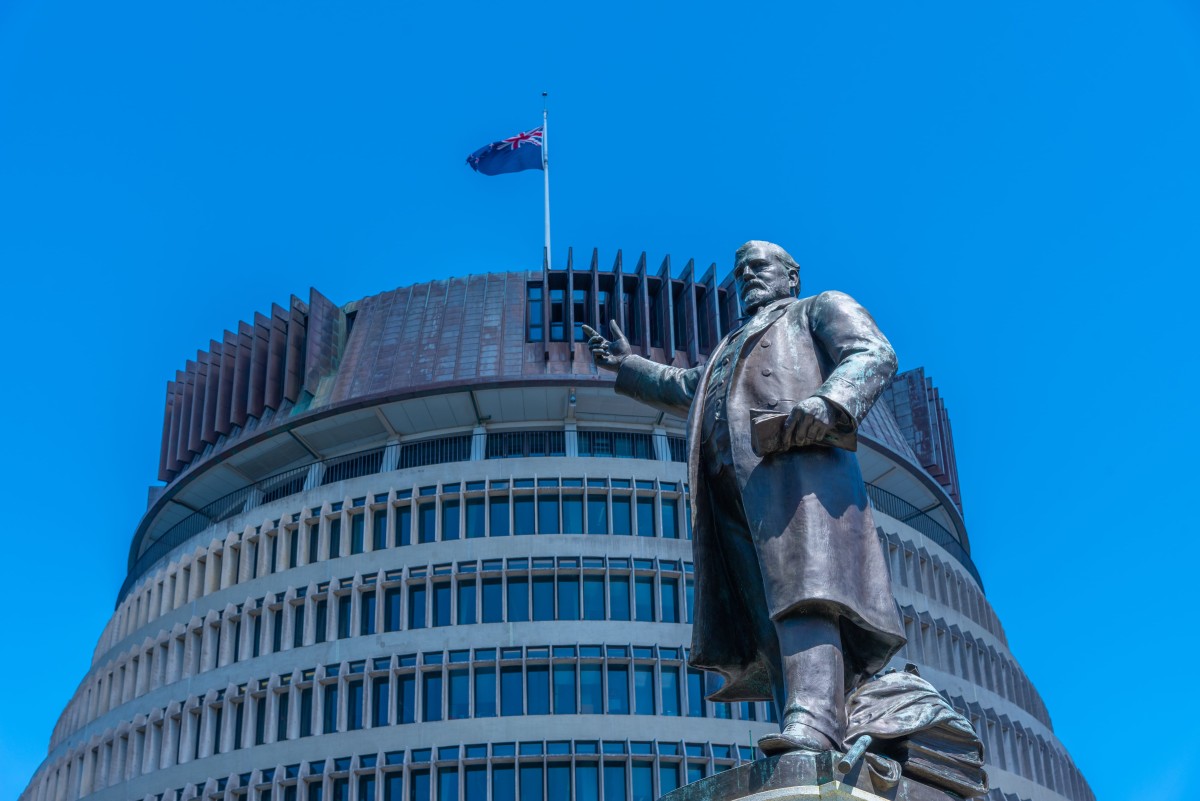

Finance Minister Nicola Willis delivered Budget 2026 on 28 May, describing it as a response to an increasingly uncertain world, “not with shallow quick fixes, but with a responsible and durable approach”. Its central theme was a return to surplus.
Budget 2026 directs significant spending to core services, including $5.8 billion for health, $1.77 billion for the Waikato Expressway, and $400 million for state highway resilience. Law and order also receives a boost, with $447 million for Corrections and $50 million for frontline police within a wider justice funding increase.
For Canterbury businesses, however, the Budget is notable as much for what it doesn’t contain as what it does. There were no major tax cuts, no large-scale business assistance packages and no headline Canterbury projects. Instead, the Government has opted for fiscal restraint while continuing to invest in infrastructure and public services.
Treasury forecasts the government’s operating balance will return to surplus in 2028-29, a year earlier than forecast in December. The projected surplus is $2.6 billion. For business owners, that matters less because of the number itself and more because it signals a government determined to get spending under control after years of deficits.
The Budget pairs $3.8 billion of new spending with $1.7 billion of savings, while keeping new operating spending to $2.1 billion. For firms still navigating high costs, tight margins and uncertain demand, the message is one of stability rather than stimulus.
That may not excite business owners, but it comes at a time when interest rates are lower than they were a year ago. For businesses carrying debt, investing in new equipment or considering expansion, borrowing conditions are improving even if direct government support remains limited.
The most immediate Budget measure for many firms may be a new levy on banks, insurers and finance companies. Expected to raise $209 million over four years, the levy will fund financial-sector regulation from 2027. While the costs fall on financial institutions, businesses will be watching closely to see whether any of those costs are ultimately reflected in lending or insurance premiums.
For Canterbury’s construction and development sector, the most interesting announcement may be a new $400 million fund that rewards councils for consenting more homes. With Christchurch continuing to grow and housing demand remaining a long-term issue, incentives that encourage development could have flow-on benefits for builders, contractors, consultants and suppliers.
The Budget also continues substantial investment in infrastructure, transport and public services. While many of the named projects are outside Canterbury, the region’s engineering, construction, technology and professional-services firms are well placed to compete for work generated by a growing national pipeline.
Perhaps the biggest takeaway for Canterbury’s business community is that Budget 2026 is fundamentally a consolidation Budget. It’s designed to steady the government’s finances rather than inject significant new money into the economy.
For a region built on resilience, innovation and long-term thinking, the Budget offers few immediate rewards. But it does provide something that many business owners value just as highly: a clearer indication of the government’s economic direction.
SPONSORED