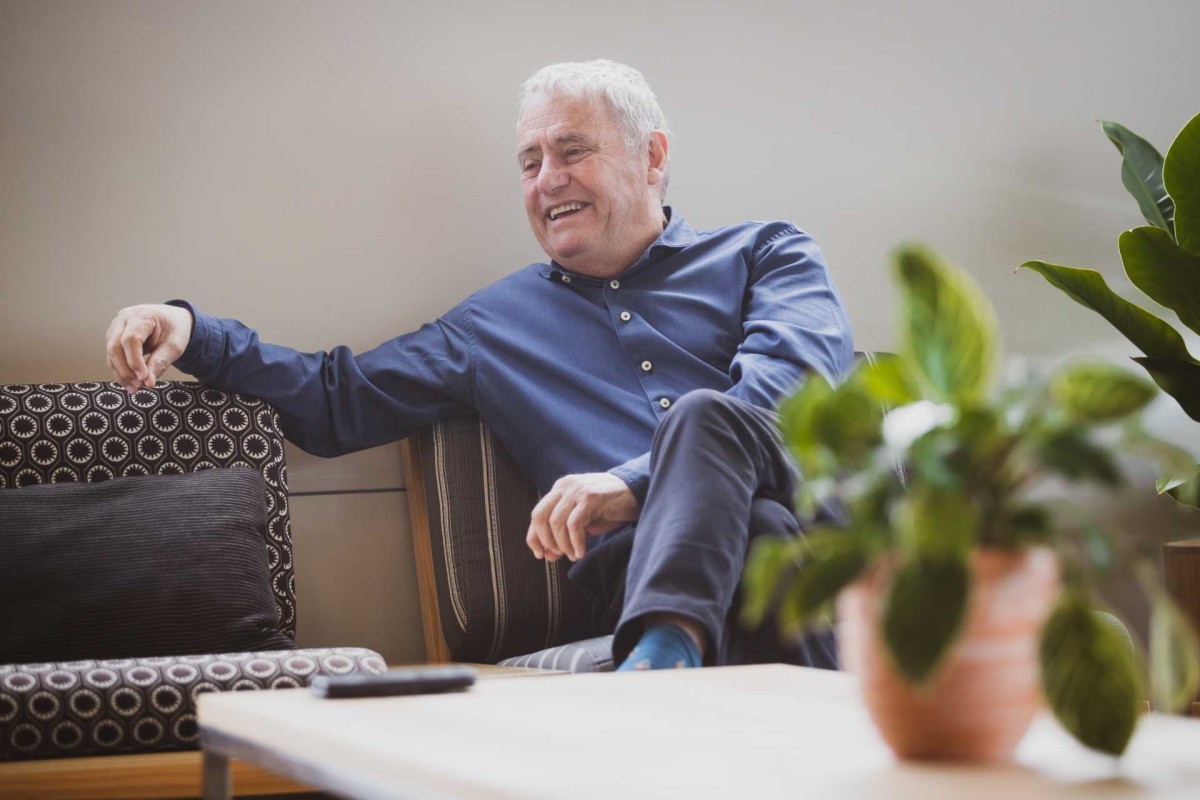

Maintaining the city’s progress, getting on top of debt, and supporting businesses and changemakers are among the priorities of re-elected mayor Phil Mauger for Ōtautahi Christchurch. With a majority of almost 20,000 votes, he begins his second term with a strong mandate – and a sense of obligation.
“I am very proud and humbled to be voted in again,” he says. “I love being mayor. You can see where the city is going. We all can.”
Christchurch finds itself in what Mauger dubs a “golden period”. People are arriving in large numbers, particularly from the North Island. Per the 2023 Census, 7% of Christchurch’s population, about 27,000 people, were living in the North Island five years prior. Between 2018 and 2023, 34,440 people left Auckland for the South Island, while just under 20,000 moved in the opposite direction. Half moved to Christchurch. The influx is good for the city’s energy and economy, he says, but the pressure is on.
Mauger says one key focus is completing the major projects already underway. The opening of Parakiore Recreation and Sports Centre before Christmas is the first. Progress on One New Zealand Stadium at Te Kaha follows closely behind, helping cement what he hopes will be Christchurch’s identity as “the sporting and events capital of New Zealand, and maybe even Australasia”.
“The downside of there being more people in the city is that traffic gets clogged up. We’ve got to make it easy for every mode of transport to get in and out of the city.”
A less glamorous yet essential project is the rebuild of the Bromley wastewater treatment plant, which has been delayed since the 2021 fire. Among other infrastructure work, it is one of the incumbent’s highest priorities. The council is due to let the construction contract before Christmas. The project is personal for Mauger as he worked on the original trickling filters. He wants to rebuild it with activated sludge to remove odours and improve efficiency. “A new system would lower the city’s greenhouse gas emissions by around 50%.”
While the insurance payout covers $85 million of the rebuild, short of the $100 million initially expected, Mauger says the long-term benefits outweigh the difference. “The cost is worth it if it delivers a better outcome for residents and the environment.”
The organics processing plant in Bromley is another focus. Prevailing easterly winds carried odours across residential areas, an issue Mauger says was unacceptable. The original rebuild was expected to cost $20 million, but estimates doubled to $40 million. Rather than delay further, council is shifting sites and partnering with EcoGas to develop a new, fully enclosed facility in Hornby.
While infrastructure dominates his agenda, Mauger also wants his next term to include more face-to-face connections with residents. He plans to continue holding public forums with topic experts.
“They worked extremely well,” he says. “It’s a great way to meet people, but also to give them confidence that we’re doing the right thing.”
Growth brings a chance to reshape the city. Mauger sees potential for intensification, starting with the five-hectare Apollo Project Stadium site, which will become redundant once Te Kaha opens. “I’d love to see it turned into housing. You could walk to Blenheim Road or Lincoln Road, jump on the bus, and come straight into town.”
He points to the University of Canterbury, where student numbers are expected to rise from 26,000 to 30,000 by 2030. Encouraging redevelopment of ageing buildings around the campus, he says, will help the city prepare for that growth.
Further west, the former Deans Ave saleyards site is slated for a zoning change and new housing. Antonio Hall and several other properties near Riccarton are also advancing through the resource consent process. Mauger sees these changes as part of “tidying up” areas that have been stuck in limbo.
The elephant in the room is council debt. A quarter of all rates revenue goes into servicing it. “The more we can pay down debt, the better,” Mauger says. “Otherwise, interest will kill us.” Every $8 million of operational expenses equates to 1% of rates. The council has a $700 million work programme, but realistically only has $500 million, creating a risk of over-rating.
His approach to squashing debt is twofold: spend within limits and protect the city’s long-term interests. That means no selling of strategic assets such as Christchurch Airport or Lyttelton Port. If the Alpine Fault ruptures, Christchurch will be critical to the South Island’s recovery, he says. But he is open to selling non-strategic land such as the Lichfield Street carpark. Lower insurance premiums this year have also freed up several million dollars.
“It’s a juggling contest that will take a while, but we will get there. There’s determination within the council now to get debt down.”
Mauger is enthusiastic about Christchurch’s business ecosystem, particularly the role of ChristchurchNZ in helping start-ups grow. He points to Air New Zealand’s $300 million investment in high-value jobs at the airport as proof that the city is gaining traction. “We should make it as easy as we can for new businesses to start up, not throwing red tape at the people doing it for tomorrow.”
He wants to inspire entrepreneurs to see Christchurch as a business playground. “Young people can think of many things at once; they’re more productive, and we shouldn’t hold them back.”
After a decade of rebuilding, Mauger believes Christchurch is finally ready to accelerate rather than recover, and he sees his second term as a chance to lock in that shift. “We don’t want to lose momentum,” he says. “The people have faith in me, and I’m determined not to let them down.”
SPONSORED