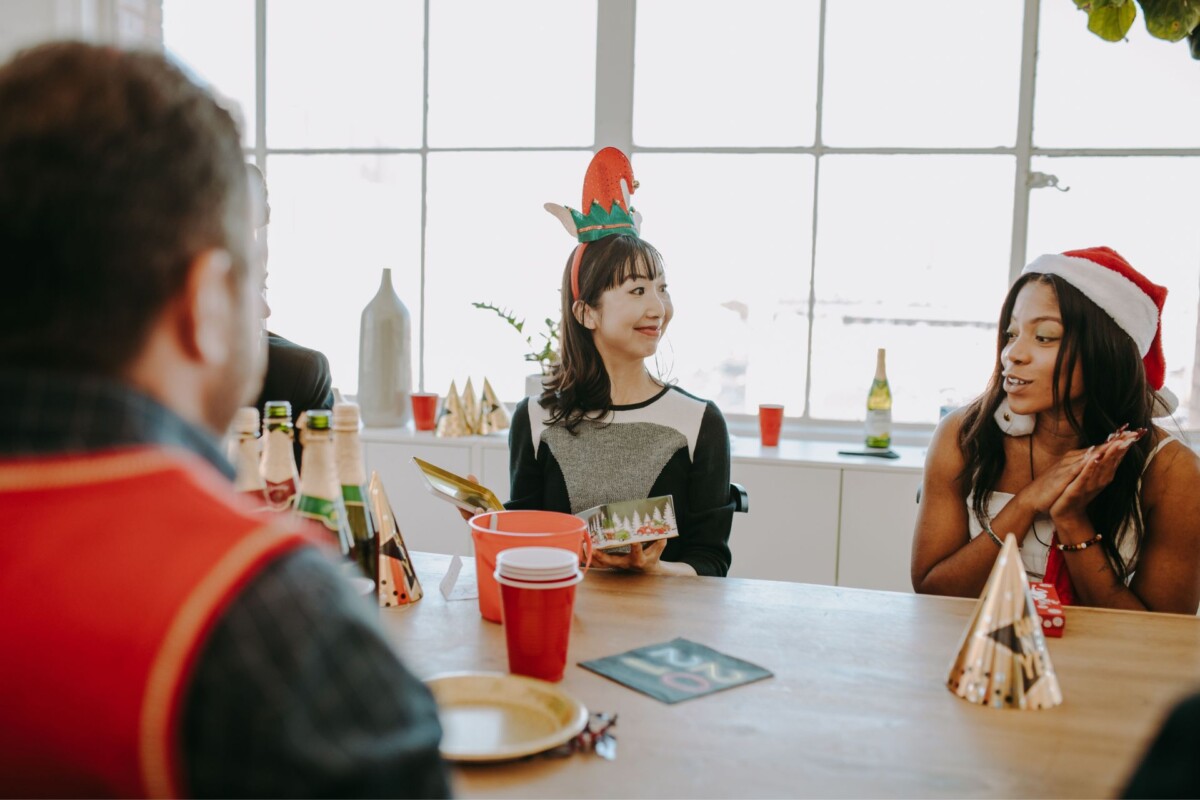

The Kiwi work Christmas party comes with long light evenings, a barbecue or a bar tab, and the first taste of the summer break. It’s a chance to thank people for the year. It’s also still a work event, and that shapes what the host and the guests can get away with.
None of this means the party has to be dull. WorkSafe New Zealand has called it a myth that a drink or two at a work function brings enough compliance under the Health and Safety at Work Act 2015 to make functions impossible to run. The law asks businesses to do what’s reasonably practicable to keep workers safe, which for social events means “a sensible approach to host responsibility”.
Dos and don’ts for the host
Do put plenty of food out early and keep it coming. Do stock non-alcoholic drinks people actually want, so nobody has to explain why they’re on the lemonade.
Do set a finish time for the bar tab, and name a manager who stays sober and runs the night. Do sort the trip home before anyone arrives, with taxis, a shuttle or sober drivers, especially if the venue is out of town.
The drink-drive limits are in section 11 of the Land Transport Act 1998. Drivers aged 20 and over can’t exceed 250 micrograms of alcohol per litre of breath or 50 milligrams per 100ml of blood. Drivers under 20 can’t have any alcohol in their breath or blood.
At a licensed venue, the Sale and Supply of Alcohol Act 2012 makes it an offence for the licensee or a manager to sell or supply alcohol to someone who’s intoxicated. The same section makes it an offence for anyone else to sell or supply alcohol to an intoxicated person, with a fine of up to $2,000.
Do think about who the party is for. Some staff don’t drink, whether for faith, health or plain preference, and some have dietary or cultural needs a sausage sizzle won’t cover. Ask ahead, and label the food.
A daytime or early-evening event suits staff with kids or other people to care for at home. So does an afternoon where families are welcome. Don’t make the party compulsory, and don’t hold it somewhere part of the team can’t easily reach.
When something goes wrong
Behaviour at a work function can end up in front of the Employment Relations Authority. Employment New Zealand says sexual harassment can come from a manager, a co-worker, a client or a supplier, and that an employer who gets a complaint must properly investigate it. If the harassment is confirmed, the employer must take all practicable steps to stop it happening again.
A 2008 determination shows how that plays out in a small trade business. In A v B and C (AA 248/08), an 18-year-old apprentice complained about the factory foreman’s behaviour at the business’s Christmas function. The business had no sexual harassment policy at the time.
The owners gave staff a general telling-off about conduct at the party and suggested they apologise to anyone they’d offended. They then started investigating before the apprentice had given the details of her complaint, and later gave her a final written warning.
Authority member Marija Urlich found the apprentice had been subjected to unwelcome behaviour of a sexual nature during the function, and the foreman accepted he’d been intoxicated. The owners didn’t have to believe her complaint, she found, but they did have to inquire into it fairly and reasonably. The Authority found the apprentice had been unjustifiably constructively dismissed and awarded her $15,000 compensation plus lost wages.
Complaints can also arrive well after the summer break. Since 13 June 2023, employees have had 12 months to raise a personal grievance over sexual harassment, up from 90 days. Other personal grievances still carry the 90-day limit.
Before the party, remind everyone that the usual policies on behaviour, harassment and alcohol still apply. If a complaint comes in afterwards, get the details first and follow a fair process.
Dos and don’ts for staff
Do eat before you drink, and alternate with water or something soft. Do plan your ride home before the first round, and remember the zero limit if you’re under 20.
Don’t use the party to air a grievance with your manager or settle a score with a colleague. Don’t post photos of workmates without asking, and think twice before joining the late-night group chat.
Do thank whoever organised it. Do look out for your workmates, and tell a manager if someone is being made uncomfortable.
The aim is a party people remember fondly in January, and one nobody has to revisit in a meeting room.
SPONSORED