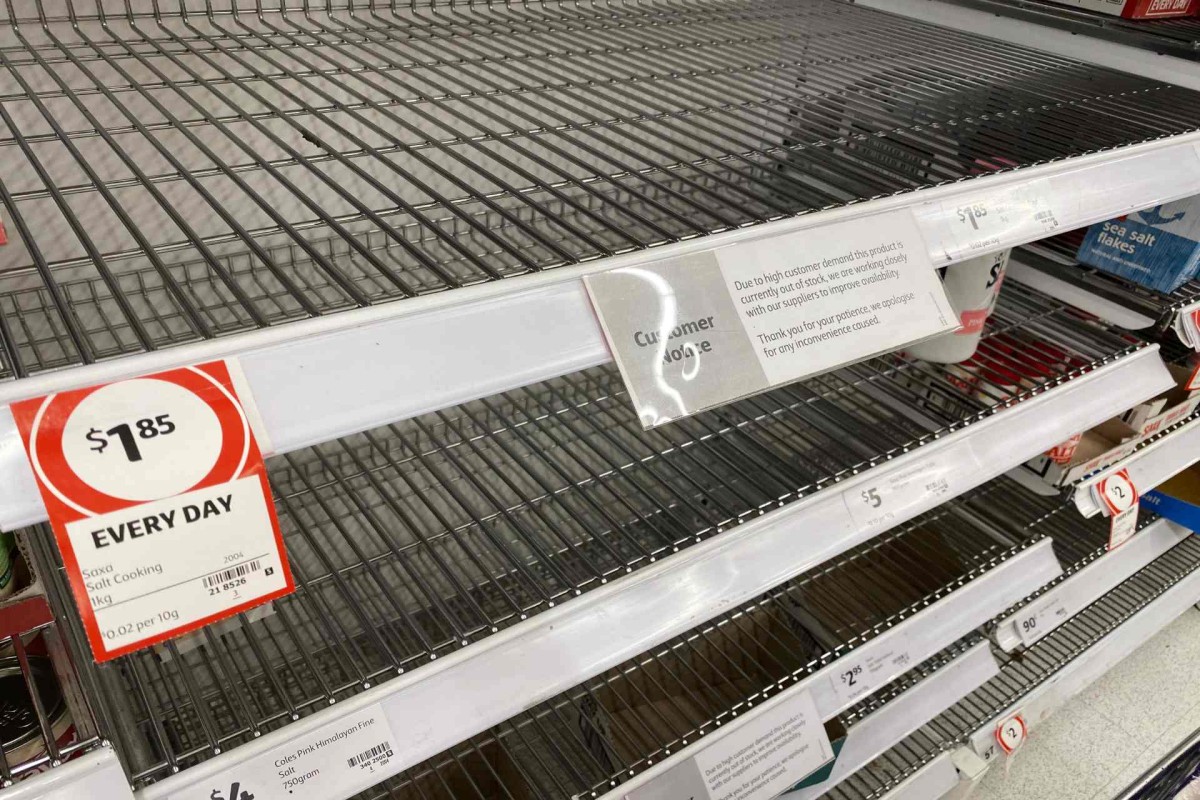

Fuel shortages, weather events, and unexpected disruptions are once again triggering panic buying behaviour, with shoppers stockpiling essentials such as fuel, bottled water, toilet paper, cleaning supplies, and long-life food.
Panic buying may seem chaotic, but it is a logical response to uncertainty, even if it ends up causing shortages.
Dr Karina Rune is a researcher in health and behavioural sciences at the University of the Sunshine Coast. She says panic buying is driven less by who people are and more by how risk and social behaviour are communicated during times of uncertainty.
Panic purchases feel chaotic, but the psychology is rather logical. It’s not irrational but a response to uncertainty in ways that make sense in the moment, even if the outcome creates even bigger problems.
Dr Rune says lessons learned during COVID-19 are critical for preventing future buying frenzies. “People weren’t panic buying because they were anxious personalities or poor planners. They were responding to the belief that stockpiling was sensible, necessary, or something everyone else was doing.”
A December 2025 study led by Dr Rune and her colleagues found that people were more inclined to stockpile when they believed there was a risk in not doing so, or when they felt that others would approve of the behaviour.
That behaviour is mainly explained by loss aversion and social proof, two key drivers in behavioural psychology. Loss aversion describes the tendency for people to prioritise avoiding losses over acquiring gains. In this case, the potential ‘loss’ is essential items if they run out.
Social proof is the tendency to look to others for cues on how to behave, particularly in uncertain situations. This means if people believe others are stockpiling, they are more likely to do the same.
“When people think, ‘If I don’t buy now, I’ll miss out,’ or ‘Everyone else is doing it,’ panic buying becomes a rational response to uncertainty,” Dr Rune said.
The fear of missing out, known as the scarcity effect, occurs when people believe supplies might run out, so the products instantly feel more valuable. Empty shelves signal danger, a fear that pushes people to buy more than they need.
Yet despite repeated assurances from governments and major supermarket chains that supply chains remain stable and well-managed, these perceptions continue to drive stockpiling behaviour.
“The problem is, when lots of people do this at once, it creates the very shortages they’re trying to avoid.”
Other psychological effects include a desire for control in uncertain situations, where buying extra goods creates a sense of security, as well as herd behaviour, where people mirror the actions of others, amplifying the spread of panic buying.
Importantly, Dr Rune’s research also identified what does not drive panic buying. Factors such as age, gender, income, and household size were not reliable predictors, nor were personality traits like intolerance of uncertainty or prior hoarding behaviour.
“This tells us panic buying is a collective behaviour problem, not an individual failing.”
Building on these findings, Dr Rune’s team explored whether reframing public messaging could reduce panic buying.
In a randomised controlled trial, Australian shoppers were presented with short, evidence-based messages aimed at challenging perceptions of risk, social norms, and the idea that stockpiling is a ‘smart’ response.
The results showed a significant decrease in both the willingness and intention to panic buy, particularly for hygiene items and non-perishable goods.
Dr Rune says that COVID taught us that telling people not to panic just doesn’t work. “COVID showed us panic buying is predictable, which means it’s preventable,” she said.
“What does work is explaining how panic buying harms everyone, reinforcing that most people are buying normally, and addressing risk perceptions before shelves start to empty.”
Understanding these behaviours can help both authorities and consumers prevent panic buying before it starts.
SPONSORED